
Recent Roy Morgan research shows that the number of Australians concerned about ‘managing immigration and population growth’ has doubled in just two years.*
While net overseas migration has dropped 40% to 316,000 since its peak in 2022-23, many see it as a key contributor to cost-of-living infrastructure pressures such as high rents, housing shortages and congested city traffic.
While these challenges have been long in the making and have many causes, immigration serves as a convenient point for grievance because it seems to be out of control and poorly explained.
Simmering public dissatisfaction comes from more than two decades of federal governments failing to put ‘nation building’ ahead of social, family and humanitarian criteria as the point of the immigration program.
And yet going back to the gold rushes of the 1850s, at crucial times since then, immigration has revitalised our national progress, invigorated the economy and enriched our society in cities, towns and regions.
Australian farming is itself an immigrant success story, something I can attest to in the achievements of my forebears.
A well-managed immigration program can help us build smarter more productive sovereign capabilities, generate stronger national security investment in northern regions, and create economic development beyond the cities.
The skills and labour shortages impeding construction of vital infrastructure and housing should be remedied partly by a substantial expansion of the skilled migrant stream.
But using temporary visa holders to help plug skills gaps should give way to reform and improvement in the way we educate and train young Australians, especially in trades and crucial professions and emerging new industries.
We can also stop wasting the talents of migrants already here.
Incredibly, some 600,000 immigrants are employed in Australian jobs but in roles well below their qualifications – at a cost close to $10 billion a year in lost value.
Crucially, nowhere near enough is being done to incentivise migrant settlement in regional communities with more than half of all new arrivals being absorbed by Sydney or Melbourne.
Less than one in five immigrants gets to make Queensland home, reflecting a southern biased geographic imbalance that is distorting our national development.
As the Planning Institute of Australia has long argued, immigration should happen within a co-ordinated national population and geographic settlement strategy.
It will work best when linked to complementary taxation and investment policies, reflecting the imperative of sustainably building a bigger stronger and more de-centralised Australia to the one that appears in the map below.
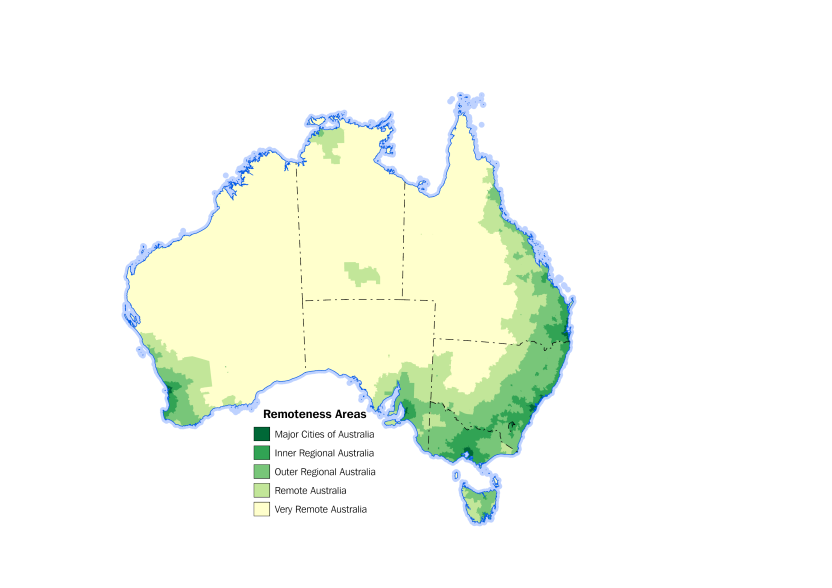
Map: ASGS Edition 3 Remoteness Areas for Australia courtesy Australian Centre for Housing Research https://able.adelaide.edu.au/housing-research/data-gateway/aria
*A version of this article was published in the “View from the Paddock” section of the Queensland Country Life, Thursday 25 September page 19. Click on picture below to read.


 Professor John Cole