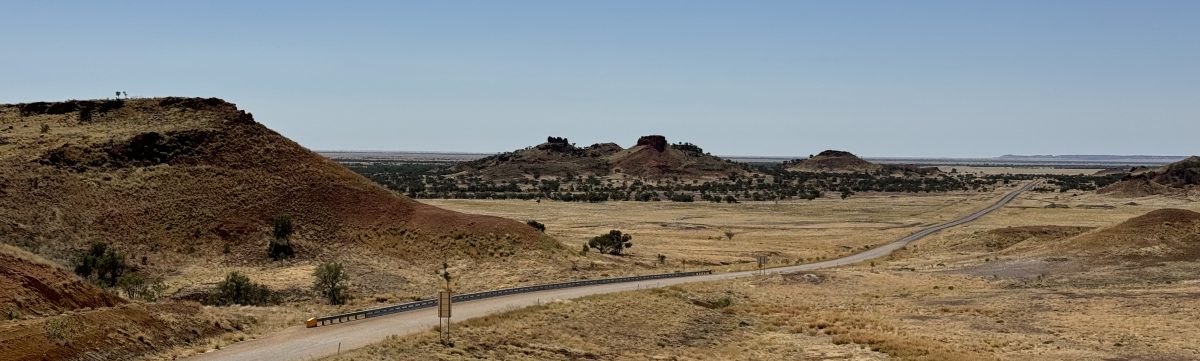

In times of uncertainty, understandably we tend to dwell on the pressures facing those on the land.
It occurred to me while researching early Queensland farming for my family history that a brighter story is the one being written by those who seek to learn, improve and act beyond business as usual.
Our pioneer forebears encountered a land and climate they barely understood, yet through resilience, improvisation and sheer persistence they helped build the foundations of modern agriculture.
Today’s farmers face different challenges, but they also have something earlier generations could only imagine: access to knowledge on a global scale.
That is why the Nuffield program is so relevant.#

Since the 1950s, Nuffield Australia has provided travelling scholarships enabling primary producers to investigate farming challenges overseas and bring home tried and tested best practice.
Nuffield is not just a scholarship funded experiential learning program equipping primary producers with the skills and perspectives they need to lead innovation and adapt to changing climatic and market conditions.
It is a showcase of farmers as thinkers, collaborators, leaders and problem-solvers.
That confidence was evident recently in Brisbane, where interviews for 2027 scholars were held alongside the annual Queensland dinner for Nuffield alumni, a gathering that underlined the depth of knowledge and ongoing commitment behind the program.
The issues attracting scholars point to where agriculture is heading – digital transformation, climate resilience, sustainability, workforce skills, global markets, biosecurity, risk management and stronger farm business systems.
Each Nuffield story begins with an industry member facing a practical problem and grows into a journey of research, travel, professional development and connection with global best practice.
The real value is what comes back: farmer scholars with wind in their sails and new knowledge shared widely across industry and communities
That spirit of reciprocity is one of Nuffield’s great strengths.
Alumni do not simply benefit from the program; they help renew it by encouraging applicants, mentoring emerging leaders, and supporting future scholarship rounds.
In an age when farming is framed too often by negatives, Nuffield offers a welcome counterpoint.
It reminds us that the future of agriculture will not be shaped by naysayers, but by those prepared to learn, adapt, collaborate and lead, even when the challenges ahead are complex.
Like the pioneers before them, today’s leading farmers are looking beyond present difficulties and finding better, more sustainable ways to grow our most essential industry.*
*This article was published first in the Queensland Country Life, 2 July 2026 p 21.
# Disclosure: I contribute as an independent member on the Queensland Nuffield Committee – all others are Nuffield Scholars.
The 2026 Nuffield Conference will be held in Darwin 8-10 September and more details can be found at https://www.nuffield.com.au/conference/2026-conference

