
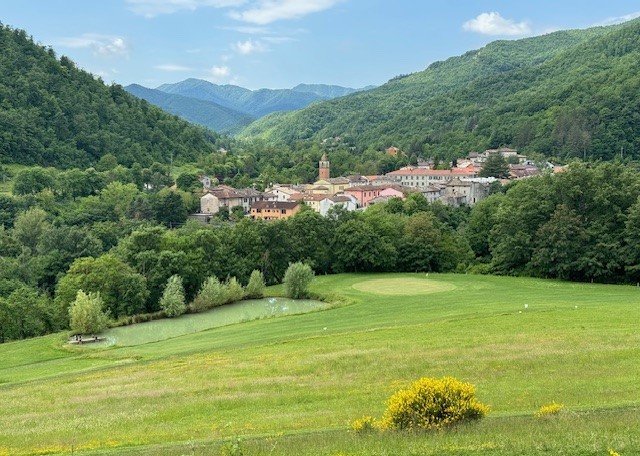
On country walks last month through the Metauro Valley in central Italy, I marveled at how small farming communities had existed there for centuries and how they continued to define and shape the character of the region.*
Rural Italy is steeped in local customs and traditions, family and community.
That seems to be the cultural recipe for surviving an eternity of natural disasters and wars, and most recently economic globalisation.
But while the resilience of traditional European agriculture might owe most to culture and history, its modern economics are shaped primarily by politics, government regulation and the financial support of the European Union.
In postwar Europe, agriculture has enjoyed broad political support with more than 80% of Europeans for often conflicting reasons supporting government investment in rural industries, even though the sector accounts for just 1.5% of the EU’s GDP.
Food security is a key concern but so are broader themes such as agriculture and climate change, maintaining the landscape and what it means to be European.
Ursula von der Leyen, the President of the European Commission, says rural areas are “the fabric of our society”, “heartbeat of our economy” and “a core part of our identity”.
This popular sentiment manifests in the EU’s Common Agricultural Policy (CAP) and an annual spend of $100 billion plus on farm and market subsidies, rural development and environmental incentives.
Across the world, the EU accounts for one in seven dollars spent each year subsidising food and agriculture.
Close to 10 million people involved in Europe’s rural industries benefit from a mix of direct support schemes, rural development programmes, and market measures.
The CAP was conceived initially to arrest rural decline and the population drift to the cities and to safeguard the livelihoods of farmers by ensuring that they made a “reasonable living”.
The aim of preserving the patchwork of picturesque farms and rural communities has worked in large part and its costs are offset partly by the revenues rural European amenity generates in the EU’s $1 trillion travel and tourism industry.
Conversely, the downside of the CAP is seen internationally in distorted agricultural trade and domestically in growing entitlement and business complacency among European farmers who look to political protest more than than they do to innovation in production and distribution.
Recent reforms to the CAP have attempted to broaden support back to smaller farmers and to reward better environmental management – policies which have fanned further discontent, especially among the more intensive agricultural industries that have benefited most in the past.
In contrast, a good example of where EU regulatory initiative finds broad support across the supply chain (at least within the EU) is is to be found in the growing number of regional wine, meat and dairy producers using an officially regulated (DOC) system to certify product provenance, processing methodology, and quality.
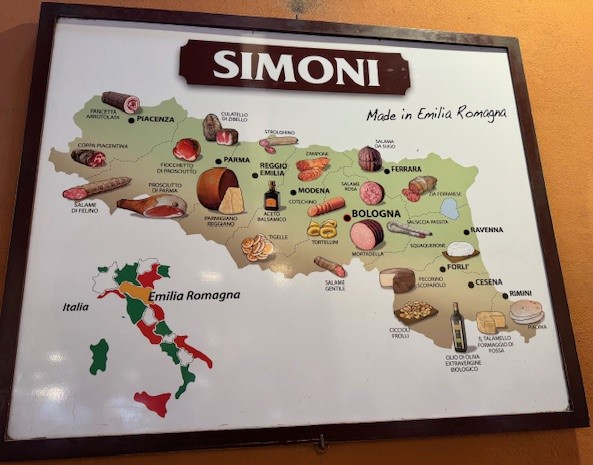
In just two Italian regions, for example Emilia-Romagna and Marche, there are more than 50 ‘DOC’ or ‘DOP‘ meats, wines and cheeses guaranteed for their authenticity, quality, consistency, and traceability.
Rigorous product documentation is delivering premium prices, brand recognition and reputation, and locally higher levels of collaboration preserving traditions and communities.
So, the view from the Italian paddock is mixed and complex – the one clear conclusion being that this rural way of life endures because most Europeans and their visitors see its social, cultural and landscape value well worth the price they pay in subsidies.
*A version of this article first appeared in the Queensland Country Life, Thursday 13 June 2024, p 29 in the “View from the Paddock” column.
 Professor John Cole