
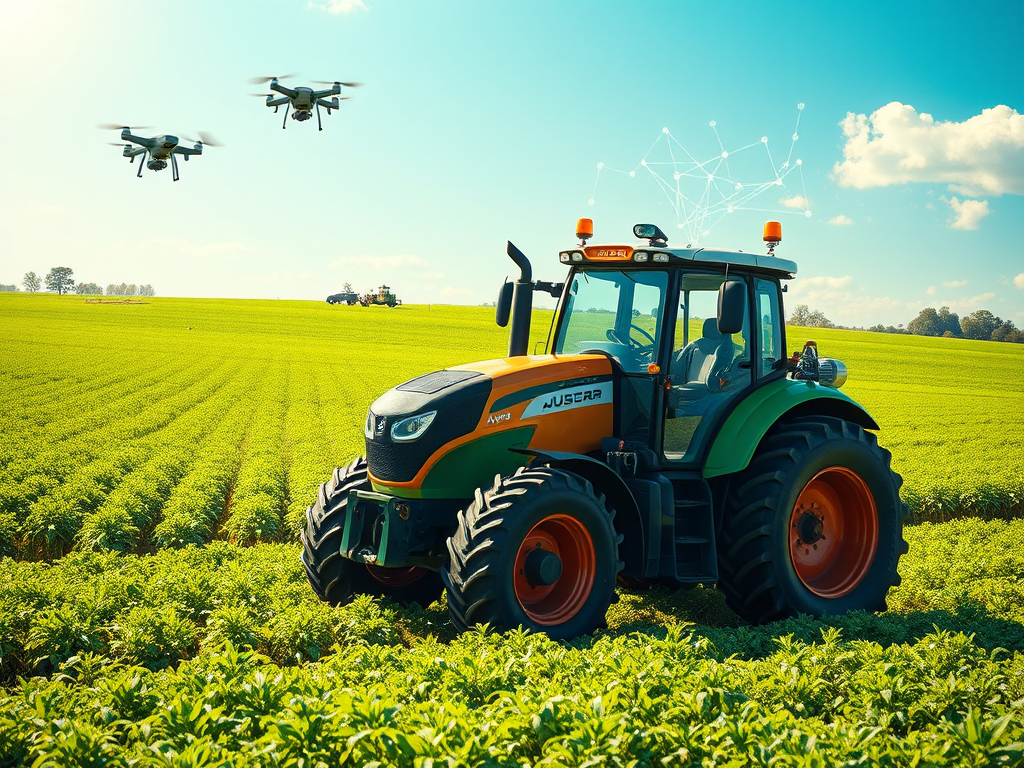
Australian agriculture remains among the most productive and competitive sectors in our national economy, a position that owes much to the significant contribution of science, technology and engineering in modern farming*.
Over recent decades, productivity growth in the sector has slowed, but technologies as diverse as genetics, robotics, biotechnology, satellites, sensors, and blockchain has ensured that today’s data-driven increasingly automated farms continue to increase output, this year contributing around $90 billion to the Australian economy.
The future though is cluttered with challenges as big as climate and environmental sustainability, biosecurity threats, ever demanding value chains and distorted trading policies – requiring even more investment, R & D and for the individual farmer, continuous skills development.
A recent Queensland Futures Institute briefing suggests that a significant component of that progress is going to come from the over-hyped but transformative contributions of artificial intelligence (AI) because of its ability to integrate, utilise and generate efficiency and value from multiple data systems and technologies.
In fact, the OECD has noted that the race to secure comparative advantage from AI across the food and fibre sector is already accelerating, part of a broader rush by global business that is outpacing earlier transformations like the internet and personal computing.
While the Australian and Queensland Governments have policies and strategies in place to support digital agriculture and ongoing modernisation of the farm sector, when it comes to making the most of AI, the devil will be in the detail, and more effort will be needed.
This means collaboratively developing commodity level AI roadmaps, commercialising local R&D, and rolling out enterprise level capability building programs assisting farmers with the skills, knowledge and professional networks needed for high tech management and decision-making in an AI world.
Farmers groups have a key role to play in technology and skills diffusion, and programs like the Queensland Farmers’ Federation SmartAG is the type of training initiative worthy of government support and imitation by other industry bodies.
‘AI for ag’ also requires legislatively enforced governance frameworks that as the NFF argues, provide an “innovation ecosystem” delivering co-design opportunities, fairness and protection of farmer autonomy in the generation and ownership of data.
So much needs to be done unhesitatingly, because as Forbes Magazine warned recently: “The question is no longer whether to embrace AI but how quickly and effectively organizations can harness its potential to secure their place in an increasingly AI-powered world”.
*The article first appeared in the Queensland Country Life opinion pages as “Experts say AI will supercharge agriculture”, 4 December 2025, page 17.

 Professor John Cole