A farmer’s post on social media a few months ago about proposals to declare buffel grass an invasive species got me thinking about the environmental performance of Australian farming and the challenges farmers have in getting their message across, especially to urban consumers – and for that matter, to policymakers in government.
How the $91 billion farming sector is perceived by others, especially city folks, is crucial to the future of our national prosperity, influencing public policy and affecting not only the sector’s reputation but also its productivity and desirability as a destination for investment and employment.
No wonder farmers and their representative organisations put so much emphasis on policies, practices and advocacy to maintain their social licence to operate.
The National Farmers Federation has spent a lot of time and money developing an Australian Agricultural Sustainability Framework created it says “to communicate the sustainability status and goals of the Australian agricultural sector to domestic and global communities and markets”.
It is high level and is complemented by a raft of initiatives developed by others, including sub-sector research organisations, applicable at the farm level.
For a range of green left groups, however, farmers are viewed as environmental vandals hostile to sustainability and the well-being of our natural systems.
Sadly, this view is shared uncritically by many Australians not engaged deeply in the issues and who remain unaware of what goes into making modern agriculture work.
Quite simply, many perceptions held about farming are uninformed, out of date, or blatantly prejudiced.
Lost in the debate is the essential and compelling point that without farmers there would be no food, no fibre and far from being good for nature, no farmers would mean most of the landscape would be overgrown by weeds.
Sustainable development and sustainability generally requires the full equation (or triple bottom line) to be in consideration when we make assessments of systems value or performance – economic (financial) social (human) and nature (ecosystems, ecosystem services, natural capital).
A key point to remember is that economic, social and natural systems are resilient (adaptive) and that good policy and practice for sustainable outcomes is not necessarily a strategy for returning to the past.
Sustainability is about achieving the best total system for the future.
Suggesting we ecologically retrofit farming regions into something they might have been before European settlement is completely unrealistic and unhelpful.
I know the farmer who posted his frustration and concern at the implications of declaring a key pastoral feed stock invasive and therefore something to be regulated and eliminated.
The farmer behind the post is an innovator, believing passionately in sustainability and the important role farmers can play not just in producing food and fibre but in helping rebuild humanity’s connection to and understanding of nature.
Importantly, this farm family has walked the talk, spending a small fortune in maximizing sustainability practices and criteria in their business and across their properties.
His key concern is that much of the anti-farm agenda is being “driven by environmental ideologues with very little practice or context in the real world”.
On the issue of declaring buffel an invasive species, he wrote: “As a long time land steward and beef producer who knows and understands this amazing plant intimately I can assure those outside of farming who truly care about our environment buffel is actually “a bloody good thing”.
“Sure it has some negatives”, he candidly admits, “but they pale into insignificance if you value a drought resistant ground cover that keeps livestock and wildlife fed, whilst significantly holding fragile soils in our paddocks rather than in our streams or skies”.
“Added to this”, he emphasises, “it is a fantastic and highly nutritious feed and a significant carbon sequester”.
The National Farmers’ Federation (NFF) Sustainable Development and Climate Change Committee Chair Mr Angus Atkinson echoes the farmer’s assessment.
Atkinson argues that “Weed of National Significance (WoNS) status should only be reserved for where there is consensus for listing, national coordination or assistance for eradication.
There is no consensus on buffel grass and farmers are strongly against listing it as a WoNS.
The NFF wants a “process for contentious plants … different to a WoNS process which inadequately acknowledges the economic value of plants like buffel.”
“Listing it as a WoNS will inflict a devastating blow to northern grazing systems, decimate grasslands dominated by buffel grass and create significant top-soil loss.”
The farmers’ fear is that none of this will count when government agencies consider the matter.
Getting the balance right in assessing the competing claims of different interests in our society suggests a need for on the one hand a greater degree of complex rigour (controlling for biases and other influences) as well as on the other hand, a degree of ambiguity and flexibility.
Assessing the relationship between farming and the environment provides a compelling example of this need and prompted me to write a piece for the Queensland Country Life which the sub-editor titled “Look to protected estate instead of buffel“.
My article suggested that instead of pushing ever increasingly regulatory constraints and accountabilities on farming, governments Federal and State could first make sure that the existing protected estate is funded and managed optimally to ensure its natural condition and species conservation significance.
Nature conservation and protection should be the mission and the priority of the protected estate to a degree not achievable in agriculture, industry, and human settlements.
This suggestion is not a criticism of existing protected areas, nor is it suggesting that national parks and farms are antithetical antagonists.
Far from it – but we should accept that they while perform different functions, both require appropriate levels of investment and management to deliver good outcomes.
Anyway, this is my Queensland Country Life View from the Paddock column of 8 May 2025 and I will leave it to you to draw your own conclusions.
BEGINS
By just about any measure of sector performance, international comparisons point to Australian agriculture as an innovator and a leader.
This is especially the case in responding to the challenges of environmental management and climate change adaption.
From reducing pesticide and fertiliser impacts to increased water and energy efficiency and better soils and biodiversity conservation, Australian farmers and food and fibre processors are defying a ‘stalling’ trend identified recently by the OECD among member countries.
Equally, in meeting climate change challenges, this same sector is adapting proactively its farm management practices, often in collaboration with research extension bodies like the Australian Government’s Drought Resilience Adoption and Innovation Hubs.
Increasingly, our producers are employing precision techniques and technologies, climate resilient cropping and livestock grazing systems, as well as advanced digital sensing and data analytics in managing the natural capital underpinning their businesses.
Voluntary initiatives in water and environmental markets continue to evolve, delivering both producer efficiency and environmental conservation benefits.
No other wealth creating sector in the Australian economy is more proactive in seeking to address changing market expectations when it comes to the sustainability of their products.
The same cannot be said for many of our competitors overseas.
The most significant impediment to securing “better environmental and food security outcomes”, according to a recent report from ABARES, remains agricultural tariffs and subsidies which reward inefficiency and waste and cost cumulatively more than US$650 billion annually.
Unsurprisingly, Asia and non-EU Europe are the worst offenders in forcing consumers and taxpayers to underwrite unsustainable agriculture, whereas Australia and New Zealand are the best performers in rejecting environmentally harmful support options.
None of this seems to matter though to those who seek to impose even more regulation and compliance cost on our primary producers – as is the case with calls for a long ago introduced pasture species to be declared a weed.
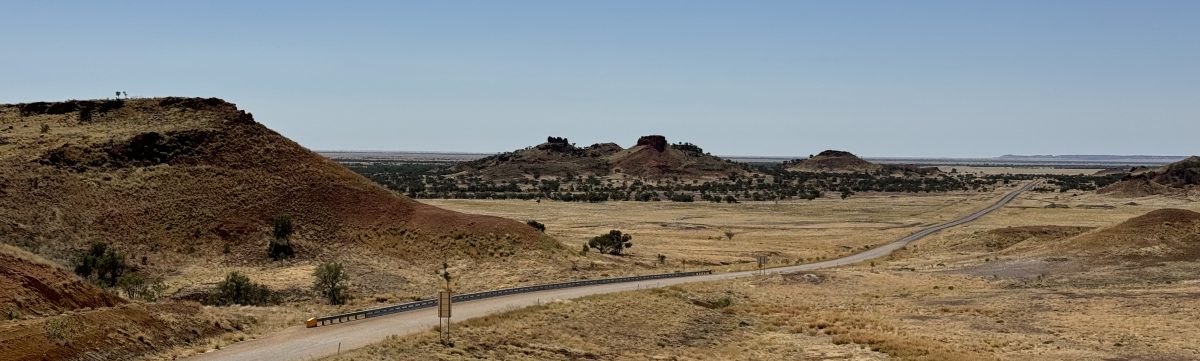
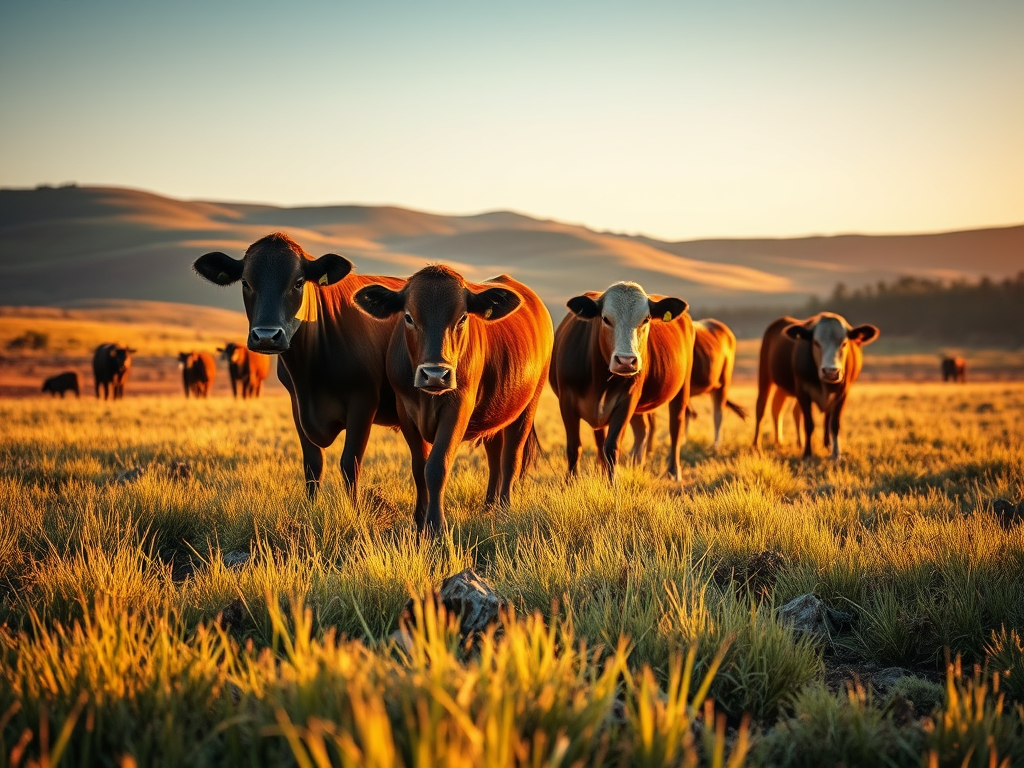
Buffel grass provides a nutritious feed for Queensland’s beef industry and is a drought resistant and highly regenerative groundcover that reduces soil erosion and sequesters carbon.
Rather than arguing for an ecological retrofit of entire regions where for more than a century pastoralism has been the dominant economic activity, critics of the farm sector should look elsewhere.
They would better serve the cause of biosecurity and biodiversity conservation by getting governments to better manage the ecological integrity of the existing protected estate, landscapes that already comprise more than one fifth of the continent.
ENDS

 Professor John Cole