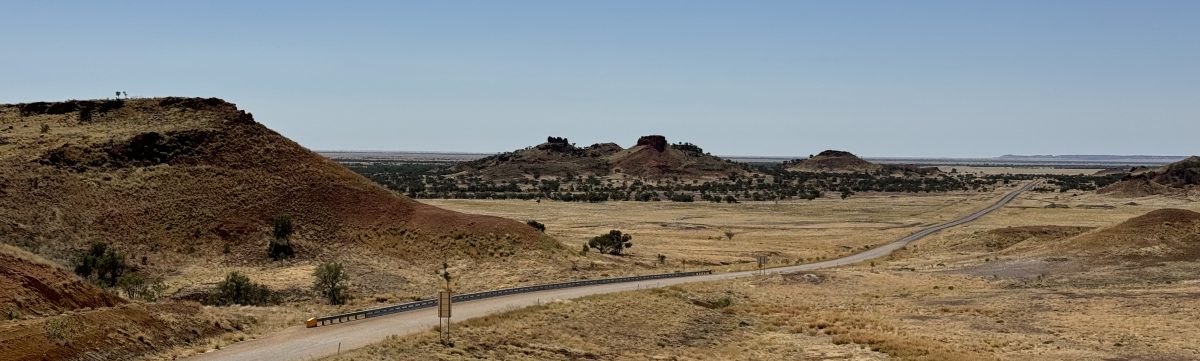
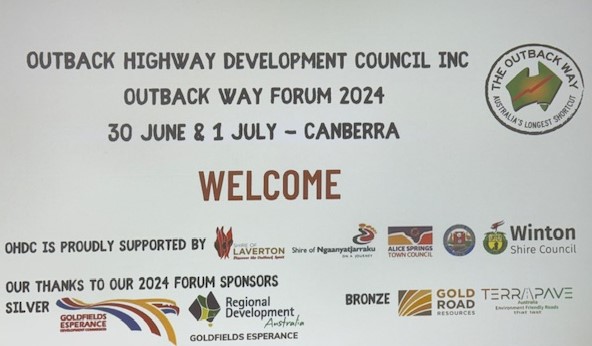
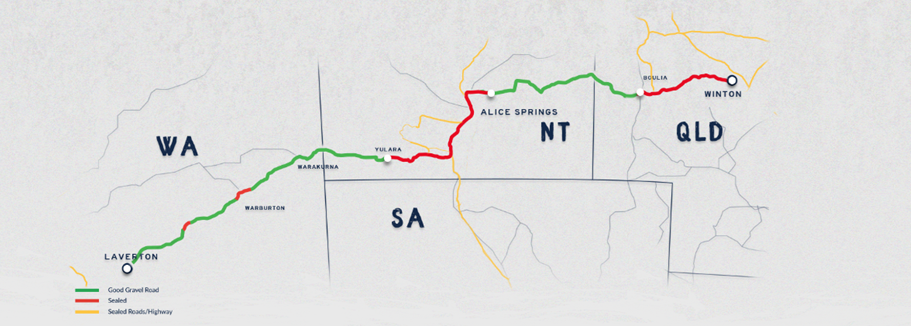
Earlier this month I had the privilege of spending two days in Canberra working with key stakeholders in the #outbackway – Australia’s longest shortcut between Winton in Queensland and Laverton in Western Australia.
It is an exciting and transformative project of national significance.
On the weekend before this year’s Australian Local Government conference in Canberra, members of the Central Highway Development Corporation (CHDC) gathered with their stakeholders to discuss how best to capitalise on what is emerging as “an extraordinary opportunity” for regional development across the Outback.
Over two days (30 June-1 July) the five local governments that comprised the CHDC work-shopped the key components of a ‘benefits roadmap’ for the Outback Way, picking up on the policies, projects and processes necessary for success in managing risks and opportunities arising from the sealing of the road.
They were joined by a number of officials from State and Territory departments, the Central Land Council, as well as Regional Development Australia, industry bodies representing tourism and road transport,and miners, tourism operators, pastoralists, and civil contractors.
Inspired by the workshop and the commitment of its participants, my ‘View from the Paddock’ in the Queensland Country Life (26 July 2024) reflects on the history and importance of the making of our nation’s third east-west transcontinental road.
“Outback Way offers regional transformation
Our roads and railways are the life-giving arteries of our national economy and society.
Since federation in 1901, Australia’s population has increased nearly seven-fold to just under 26 million and our national economy has expanded from $4 billion to $1.3 trillion.
And yet for this nation continent, the building of roads and railways has been underdone, particularly in providing interstate linkages to the north and west beyond the south and east of the continent.
It was not until 1917, for example, that we had the transcontinental railway across the Nullarbor, and it took the emergency of World War 2 to connect east and west Australia by road via the Eyre Highway in the south and the Barkly Highway in the north.
A fully sealed east-west transcontinental highway across the centre of the country is a dream at present, but by the time of Brisbane’s Olympic Games, it will be reality when Australia’s longest short cut, the 2700-kilometre Outback Way, will be sealed completely and upgraded.
It will owe most to the vision, focus and determination of the Outback Highway Development Council – an alliance of five local governments from Laverton and Ngaanyatjarraku in Western Australia to Alice Springs in the NT and across to Boulia and Winton in Queensland.
For a quarter century these Councils have worked tirelessly to secure bipartisan Commonwealth support and a $1.2 billion investment to realise a transcontinental link that will stimulate a summer-time economy by facilitating an international tourism itinerary stretching from the Greater Barrier Reef through the Outback and beyond to the goldfields and the southwest of WA.
While only 40,000 Australians live there, the Outback Way will provide benefits to the nation well beyond the regions it traverses, when sealed, including new opportunities for the pastoral and mining sectors.
It will help reduce life disparities for remote indigenous and rural communities so much in need of employment and reliable access to services.
So true to form, these people of the Outback look beyond their postcode to see a land of plenty and opportunity.
They are thinking big, well beyond their own communities, and reaching out to others to share in the benefits.
Regional transformers they are writing a new chapter in our national story.”

Read more about the Outback Way here.

 Professor John Cole