Edited remarks in an address to the National Renewables & Agriculture Conference, Toowoomba, 4 July 2024
Thank you, Charlie, for that introduction.
Ladies and gentlemen, it is great to be here at the National Renewables in Agriculture conference.
It seems that lately I’ve become a bit of specialist in giving the end of the day talk, charged with putting life into the graveyard shift.
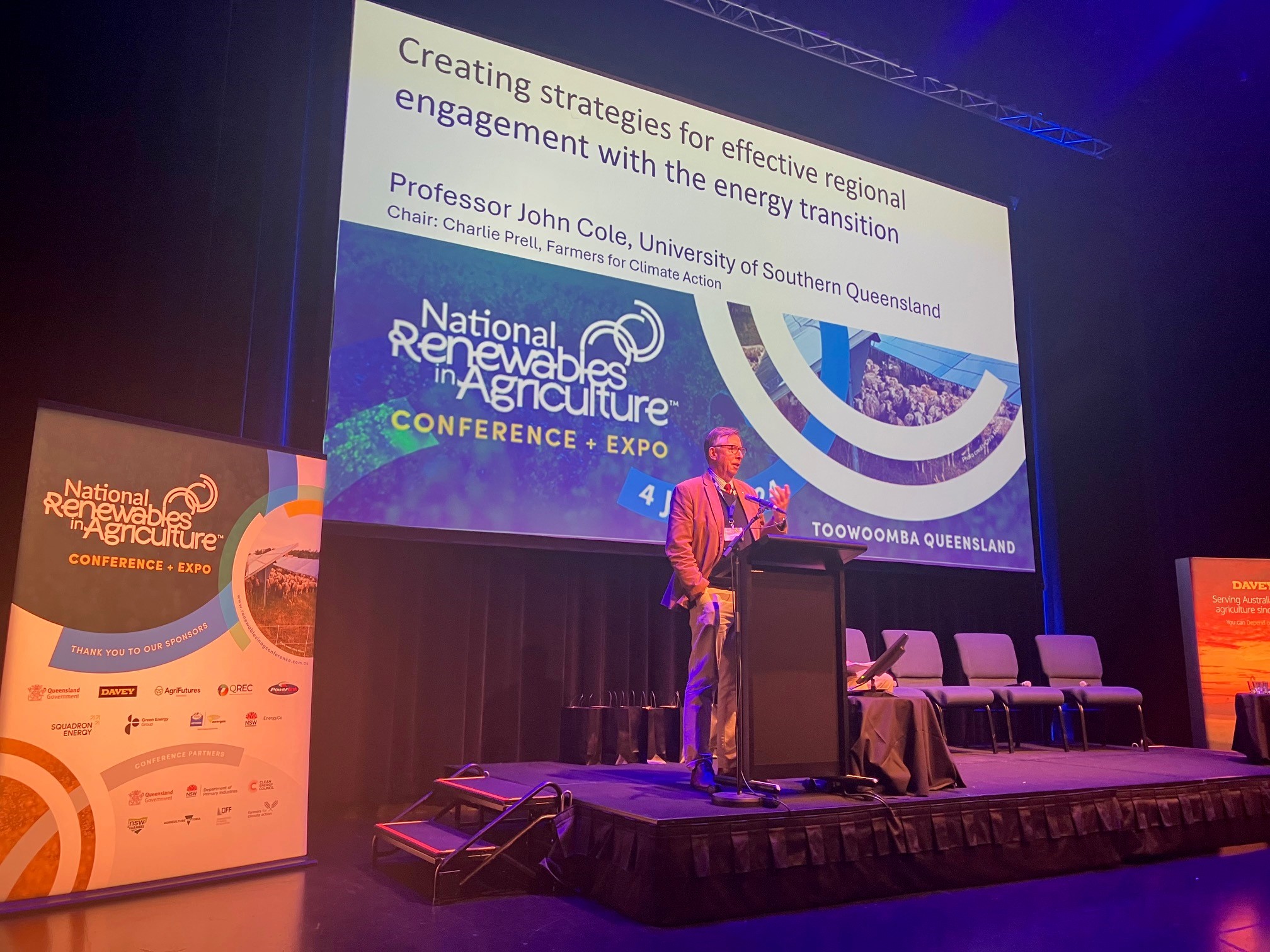
It’s a challenge, but the good thing is I get to have the last word, knowing too of course that my talk is the only thing between you and end of day drinks.
Karin, thank you for inviting me to speak here today. It is a privilege.
Before I start, I’ll give you the details of my website, because you can read there about the various topics I’m going to talk about here today.
Go to www.profjohncole.com and among other things, you will be able to read the post that I believe prompted Karin’s invitation to participate.
Titled “Beyond co-existence to integration: regional development in a net zero world”, the post canvased the lessons from the coal seam gas boom here in Queensland.
Late last year, I spoke to a group from the Mallee-Wimmera in western Victoria about those lessons at a workshop.
I presented alongside Sabiene Heindl from the Energy Charter who detailed best practice perspectives about community engagement.
The Victorians were interested in hearing about some of the lessons from the Queensland experience, but also some of the other things that they should be thinking about as the energy transition takes hold in their part of the world.
It starts and ends with community
Going back to the start of the day and the opening remarks by Cathy McGowan, I will try to book end proceedings by picking up on her personal prompt to action.
Remember, “If not us, who? If not now, when? And If it’s going to be, it’s going to be me”.
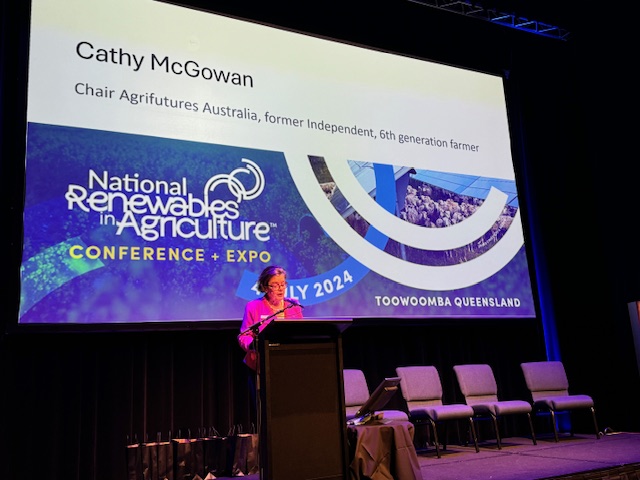
As someone who thinks of himself as “old fashioned Jeffersonian”, that is one who believes in the primacy of individual responsibility and community initiative, before government is brought into the deal– Cathy’s words resonated strongly with me.
Believing that government is the last not the first resort in regional and community development, my first preference will always be for ground up development with active community involvement.
Better outcomes are achieved, particularly when arrangements or technologies are innovative, when projects are initiated and driven locally, coordinated by regional stakeholder collaborators, and facilitated by enabling state and federal policies and programs .
Regional communities dealing with new private sector investment especially will achieve higher levels of local involvement and ownership of the outcomes if first they mobilise as much of their business and community resources to engage in the opportunity.
Of course government has a key role in major developments and there will be situations where inter-governmental collaboration and investment is essential to create the foundation for regional and community development.
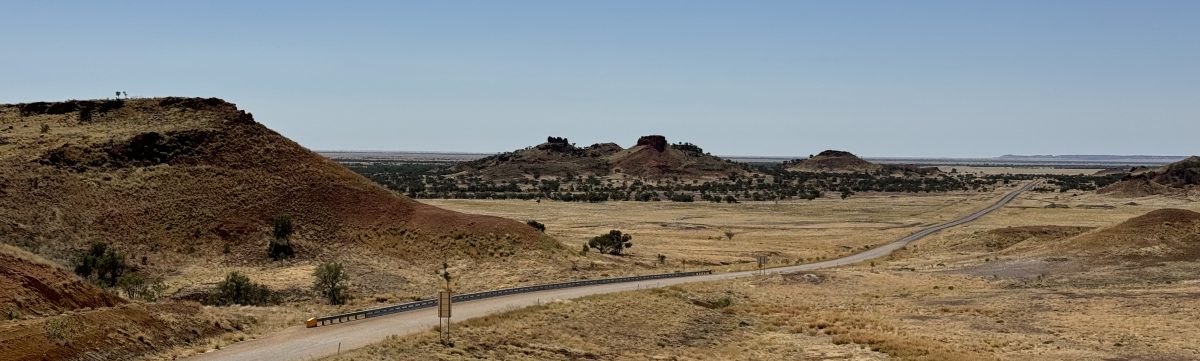
I saw this very clearly a few days ago in Canberra when participating in a strategy forum with a group of central Australian local governments, from Laverton in Western Australia through to Winton in Queensland.
Councils comprising the Central Highway Development Council (CHDC) have secured over a billion dollars in federal funding.
That amount will be spent over the next 8 years with the sealing of what will be Australia’s third transcontinental highway.
It’s a big deal and exciting in its potential.
As different as that project is to our focus here today, it occurred to me as I was listening earlier that the issues those Councils are grappling with as they look to leverage regional development off an investment are not so different to much of what has been discussed here.
Things like positive and negative impacts on existing communities, local capacity building to minimise disruption, and strategies for making the most the most from a new reality flowing from the infrastructure.
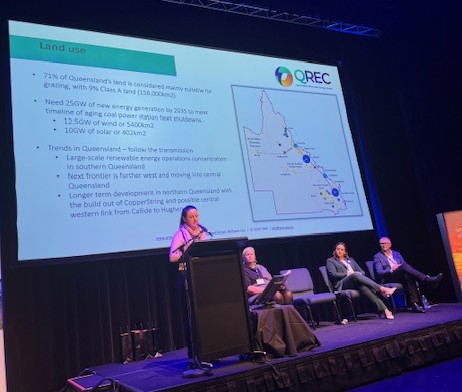
So the issues of regional and community development across the vast expanse of regional Australia in all its diversity coalesce into a number of crucial themes starting with human and social capital, local leadership, community cohesion, and capacity to adapt.
State and national policy should assist not inhibit regional innovators
Just reflecting on today’s program, the speakers, and the topics, I must reiterate what a positive day it’s been.
It’s so reassuring to see so many initiatives, so many smart and determined people doing interesting and ground-breaking work that underlines the innovative character of Australian agriculture .
I’ve been working around these topics going back to 1989 when I joined an environmental technology start-up in Brisbane.
Over that time across the energy and environmental sectors, our engineers, technologists and scientists have been very active, their potential impact restrained by an absence of shared political vision that has resulted in conflicted public policy.
That and a government preference for standardised approaches to infrastructure performance and roll-out creates its own risks, delays and problems.
I was reminded of this by David Shankey this morning pointing to the challenges government faces in infrastructure related policy and program development, because all communities want something different.
Well, thank goodness for that I say.
We want our communities to be different and to play to their different strengths.
We ask that this process, this energy transition, be rolled out in a way that engages the realities of life on the land, in rural communities, across regional Australia reflective of its great diversity of regional Australia.
As difficult as it is for government, there shouldn’t be ‘a one size fits all’ to infrastructure development and community engagement.
And in acknowledging the challenges that presents to government we would do well to cut them a bit of slack in building flexibility into their regulations and programs.
Today we learned there is so much more to the renewables and agriculture story than simply wind and solar farms.
I was really interested this afternoon during the biofuels discussion to be reminded that in the confluence of energy and agriculture sector we’re seeing a range of homegrown solutions that present on-farm closed loop solutions.
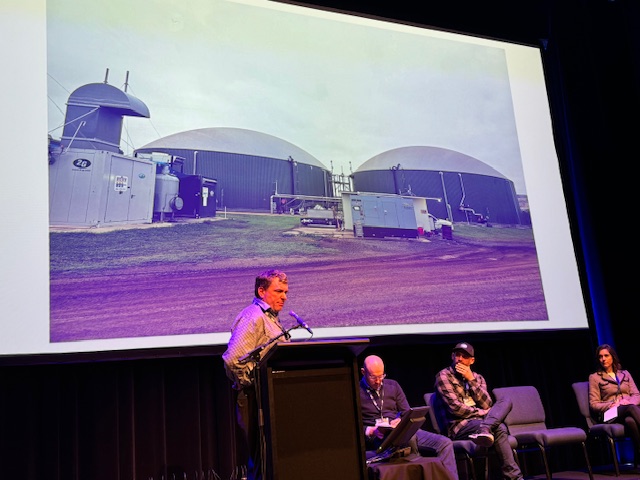
Such innovation is not figuring in the conversation beyond the sector because our national debate reflects a mindset trapped in last century thinking about centralised energy systems and national grids.
Without more input from the innovators on the ground in the regions, the energy transition could be hamstrung by government policy that inhibits rather than assists the roll-out of renewables infrastructure.
Government ownership of the energy system, for example, has its pluses and minuses.
In Queensland the government faces something of a conundrum as the majority owner of the electricity system because it seeks to fit us out with a new renewable energy network while also paying off the old one – the one that’s becoming obsolete.
So going back to Cathy McGowan’s point about involving community players, I can only say the more the merrier.
We must work actively to engage communities, new players, all kinds of stakeholders and reward our innovators.
Government can’t do this by itself, and indeed it can’t do it for us.
Transforming our national energy system is a nation-changing project of such a magnitude it must be something we’re all involved in because that is the way we will secure the most innovative and equitable outcomes, especially in the regions.
We should be agnostic about technology
As to which technology we should be using or prioritising, I am completely agnostic.
So long as the technologies and related infrastructure are safe, reliable, affordable and timely, they should be on the table.
We ascribe too much moral association to technologies.
The energy transition should be about science, engineering and economics, not ideology or religion.
Technologies cannot be “right or wrong”, “good or bad”.
Frankly, if the technology fits the performance bill – safe, reliable, affordable, timely, well then, we should be using it.
Rather than fueling unproductive and distracting discussions about the merits of different technologies, we should be letting investors and markets work that out – all set in a policy and regulatory framework consistent with Australia’s commitment to the Paris COP 21 agreement on climate change action.
Adaptation is essential and that means you
Instead, we would be more constructive if we were to focus on ourselves and what we must do as individuals, enterprises and communities to adapt to changing circumstances.
Going back to Cathy’s point this morning, “If it’s going to be going to be, it’s going to be me”, are we asking ourselves how will we be part of the solution?
It might mean change or adaptation on our part, which is something we learned here in southern Queensland over the past 15 years with gas and agriculture.
The main thing for communities and landholders, for that matter, is to not get lost in the weeds and lose momentum and direction.
Nation building programs must share the benefits equitably
This discussion we’re having today about agriculture and renewable energy is part of a nation building picture.
This is Australia on the move. We’re part of a global response to global warming that was called out for action as far back as 1988 by the scientist British Prime Minister, Maggie Thatcher.
Clean energy is part of the solution, and so going forward, regional Australia has a role to play.
But that said, when discussing impacts this shouldn’t just be all about the regions carrying the burden for the cities.
The energy transition, including the adoption of renewable energy solutions, must be fair in the way impacts and benefits are shared.
Indeed, I’d like to see far more emphasise on how distributed and dis- aggregated energy infrastructure and systems can support new industrial and regional development off the main grid in the regions.
As it stands the national grid is understandably and essentially coastal industrial and metro-centrist.
Over the coming decade it would be an opportunity missed, if more emphasis is not put on regional self-sustaining energy systems.
Don’t wait for city based politicians to champion this idea, because they will not..
Regional energy systems will need local champions in the regions.
So what you focus on is vital to success – from farm to region.
The energy system is only part of a much bigger system. Don’t forget the rest.
Change the energy system and you change the regional system, and you change the nation with it.
How you think determines what you think about
The changes we are talking about can be depicted as ‘wheels within wheels”.
Everything has a context and whatever you are focused on is usually part of something bigger.
The main thing is that the wheels all move in the same direction.
To ensure that outcome we need stronger alignment in the thinking between government, industry and communities.
Remember, how you think determines what you think about.
Putting your head in the sand or jumping in the trenches to oppose a mega-trend is only going to end in you being buried.
Not much will be achieved by seeing the future as a problem or by walling your horizon inside a silo.
The issues before us require creativity and expansive positive approaches that link individual on ground projects to the bigger picture.
I’ve been so reassured through the day to see the kinds of people up here that are doing just that – innovators, entrepreneurs, farm and community leaders, as well as renewables companies looking to build and operate the infrastructure our nation needs.
Most of the people in this room epitomise the “have a go” mentality needed.
But for many others in regional Australia the challenge remains to escape the so-called ‘deficit thinking’ and leverage local resources with partners and investors from elsewhere.
Systems, structures and organisation are always going to be important, and yes farmers working by themselves with a good lawyer are probably going to pull off a good deal for themselves.
But if that is you, it is also worthwhile remembering you have neighbours and a local community.
Think regional systems and local structures
The systems and structures I’m talking about here are those we need to work together, to organise and collaborate, mobilise local networks and bring people together to facilitate a more productive conversation.
This is what I mean when talking about adapting to make the most of the opportunity to secure local and regional benefits in a win-win situation.
Most of the renewable energy companies, just like the gas companies before them here in Queensland, don’t know the local possibilities for new value creation any better than you do.
This is a new process we’re trying here.
We’re rolling out a national energy transition involving a massive amount of investment and infrastructure.
Indeed, some of the assessments prepared by Net Zero Australia (a collaboration involving the University of Queensland, University of Melbourne and Princeton University as well as Nous) suggest that at the current rate we’re rolling it out, we will still be doing it in 2100.
So, I think it’s fair to conclude we have not even begun to see the full magnitude of what is involved in reaching the 2050 net zero target.
Frankly, must more needs to be done by our political leaders to explain the pace and quantum of effort, especially in investment, for on-ground projects as well as the seven fold expansion in jobs and skills needed to make it happen.
And already we’re seeing with housing and other civil infrastructure such a contest for labour, skills and materials causing delays and upward pressure on costs.
So in that context, to be competitive for investment and support, local communities or interested groups will think partnerships, engagement, collaboration, and others you can work with.
This is not something you can leave to local government alone.
Instead successful communities will add to it with non-governmental critical mass by mobilising local networks.
That means you and your neighbours coming up with the structures and the systems needed for your community to engage with the opportunities presented by the energy transition and evolve as local conditions change – some cal it adaptive governance.
Local governance without more bureaucracy
The main thing about adaptive governance is that it’s future and solutions focused and is not centralised in just one authority point like the local Council or State Government department.
Instead, there will be several sources of authority and community credibility that can be as different as the local chamber of commerce, church and service organisations, farmer or NRM groups, or new community groups established specifically to address the issues at hand.
But importantly, they’ve all got a legitimate right to be involved in this conversation because it affects everyone.
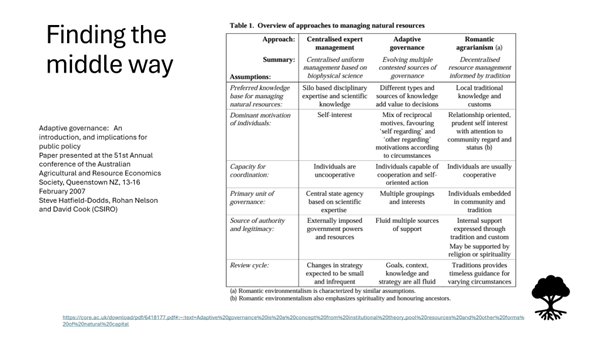
Research into regional resilience shows that the more you involve people. the broader, more inclusive you are in community, the richer the conversation, the more powerful it becomes, and the more likely powerful external stakeholders will deal with you.
The last thing we need to do with creating business and regional development opportunities is build bureaucracy.
This is the problem we have so much with government involvement already which diminishes the chances of ground up development.
It’s the kind of thinking that gives us a limited policy concept like “coexistence”.
And with great respect to my friends in the Queensland Government, I suggest we move beyond ‘coexistence’ as the name for an independent statutory agency that is supposed to do more than be an umpire between competing sectors.
Beyond coexistence to shared value
Coexistence like regulatory compliance is a starting point, not an end in itself and it certainly falls well short of providing a vision for the regions.
What’s wrong with ‘sustainable development’ as the goal?
Square off on the essentials of that encompassing and visionary concept and you will deliver the social equity, environmental safety and economic growth that we all aim for.
A far better idea than ‘coexistence’ as an organising concept for agriculture and renewables is ‘shared value creation’.
Let’s talk about instead how we as a community can work together to create new value together, shared value that delivers beneficial triple bottom line outcomes.
It keeps coming back to not losing sight of the regional system, wheels within wheels, and being part of the broader community conversation – even when negotiating a contract for infrastructure to be built on your land.
Even before the renewable energy company or government owned utility arrives to start its engagement with your community, you should be starting the conversation, doing the research and forming a view of what you’re about as a community when it comes to the possible opportunities.
In having that conversation, it should lead to be a shared view and inclusive view.
Regional development means more than business development.
Be holistic and inclusive of youth, indigenous and women’s groups, social and service groups.
They’re part of the community and have as much stake in regional development as anyone else.
Do that and as a community you will be a far cry from where the Surat Basin communities were in 2010, when there was no organised non-governmental negotiation with the newly arrived coal seam gas industry.
Because when all is said and done, this big complex process is not just about you or your property.
Collateral infrastructure and services
While our focus maybe on the energy transition and the roll-out of renewable energy infrastructure with its impacts and benefits, there’s a concomitant need to be emphasising the collateral infrastructure that goes with it.
And I mean the obvious one – creating new skills and employment opportunities, making sure that we’ve got the people that can work on the rollout and deliver and then maintain it.
There’s such a diversity of technology emerging in the clean energy industry that we will need hundreds of thousands of new skilled workers in related fields by the middle of the century.
As we’ve seen here from Brad Donovan of Ground Source Systems and his heat pump technology, there will be great challenges in ensuring an inter-generational handover from the existing and aging generation of experienced engineers and technologists to the generations that will complete the roll-out in 25 years.
It reminds us of the need for education and training and skills development or we will find ourselves underdone and under-capacity to move forward.
So the conversation in your part of the country has to include collateral items like employment and training and staff attraction and retention.
Challenge negative stereotypes with positive stories
And of course, as we’ve heard today, there’s nothing like positive stories telling stories, stories that excite and inspire to attract the right people.
We have a shared interest in challenging myths and preconceptions that work against the reality of agriculture being one of the nation’s most innovative and productive sectors.
Farmers for Climate Action suggests that not all farmers are against the move away from fossil fuels and coal-fired power stations.
So, in closing what did I what did I tell Karen and others about the lessons from the coal seam gas boom here in southern Queensland.
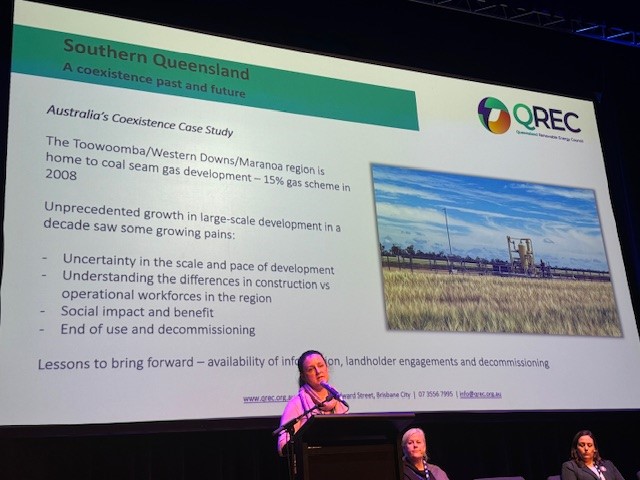
Let me just finish with a couple of more points.
The main message is the one that came from Cathy McGowan this morning and we’ve seen evidence of it through the day.
It starts with you and your community and you’ve got to get on the front foot.
Communities or farmers that get themselves into an adversarial confrontation where there’s denial about what’s happening will only lose out.
We’ve got the big wheel of climate change, we’ve got the next wheel of the energy transition and it’s coming to a place near you.
Make the most of it. Get involved. Do your study.
Remember building resilience starts with awareness.
Find out what’s going on. Do your research and organise constructively.
I don’t see much value in lining up with activists.
They will have their own agenda and while I acknowledge that there might have been some value in some of the activist protest here a decade ago at least in bringing some accountability on the part of government.
In the scheme of things that didn’t really help the farmers.
In fact, it gave some farmers false hope about what was happening.
Don’t be distracted by the hype
It’s more useful to look beyond all the hype too.
Where do you think we are with renewable energy and the rollout on this curve?
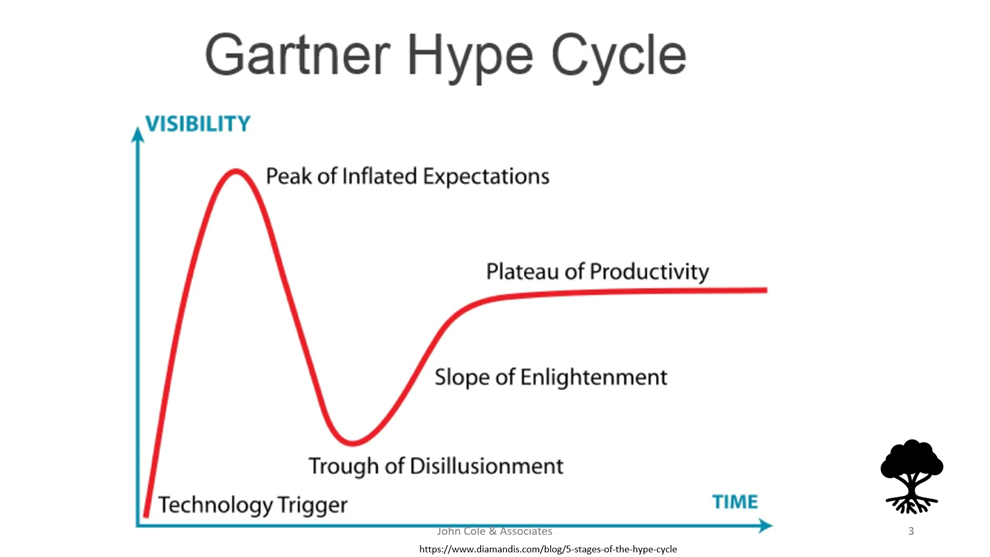
Most major, especially transformative innovations can be applied to a Hype Curve, because that’s what happens when an invention, idea or proposed pathway occurs.
That’s what we do – we talk it up – politicians and industry proponents and others who see benefits to themselves and others who share their thinking.
Opponents also get caught in the hype by exaggerating the risks and perils of actually adopting the new way.
And in fact, what happens is a flawed public debate that does not reflect reality.
Right now it’s fair to say the proponents of renewable energy are hyping its benefits and its detractors are hyping its limitations.
But some time after we pass through the trough of disillusion finding that there is no silver bullet to the future or creating a clean environment, the technologies and the new ways of doing things will become normalised.
In part, this happens because over time experience fills in the knowledge gaps that exist at the start long before we reach the “plateau of productivity”.
At the beginning of the coal seam gas industry, no one player could confidently plot in detail the next ten years.
This schematic is the ‘Johari window’ for the psychologists among the audience.
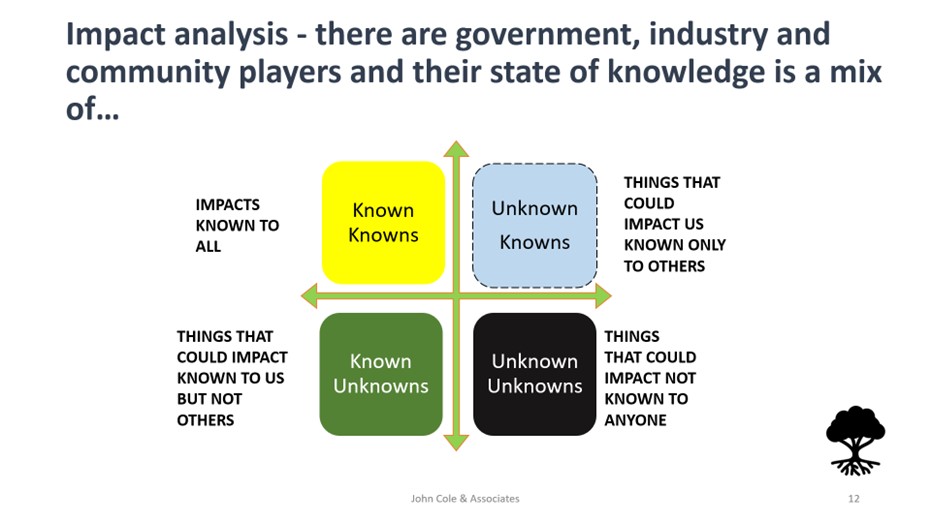
Donald Rumsfeld made the schematic framework famous when discussing the then war in Afghanistan.
There were quite a few ‘unknown unknowns’ when the coal seam gas industry came to the region.
Neither the industry nor the local communities nor for that matter the government really had a full handle on what would eventuate and understandably there was much angst in the farming community and towns.
There were risks not even the key players were aware of.
Sharing information enables better outcomes
This slide shows what the information flows at the time were like really – before the Gas Fields Commission and a lot of lessons learned.
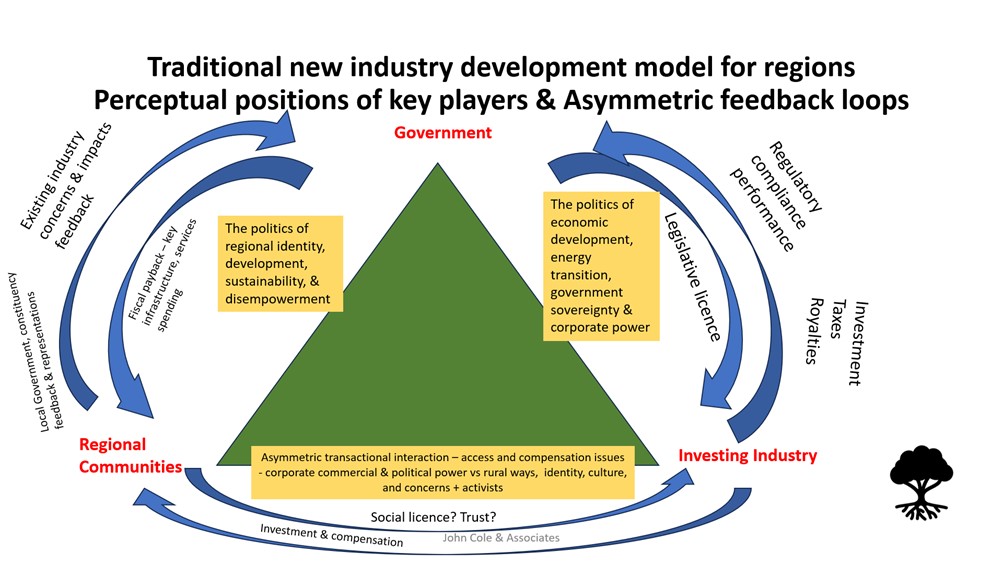
Information was not shared, and information flows were asymmetric and unhelpful to collaboration because there was nothing in the way of strategic dialogue between the interests.
A fair better alternative approach would have been to have far greater transparency and shared information encouraging key stakeholders to work together.
In some ways the roll-out of the renewable energy infrastructure risks repeating some of the errors of the past, but at least here in Queensland we have learned some hard lessons, and it is reassuring to see that reflected in the work David Shankey and his colleagues in the Department of Energy and Public Works are doing with groups like the Queensland Farmers Federation.
We’ve learned from the coal seam gas experience and the Queensland Renewable Energy Landholder Toolkit jointly produced by the QFF and the Queensland Government merits commendation as providing valuable information to interested stakeholders.
The Government’s Local Energy Partnerships program as well as the proposed Code of Conduct for Renewable Energy companies are also very useful contributions.
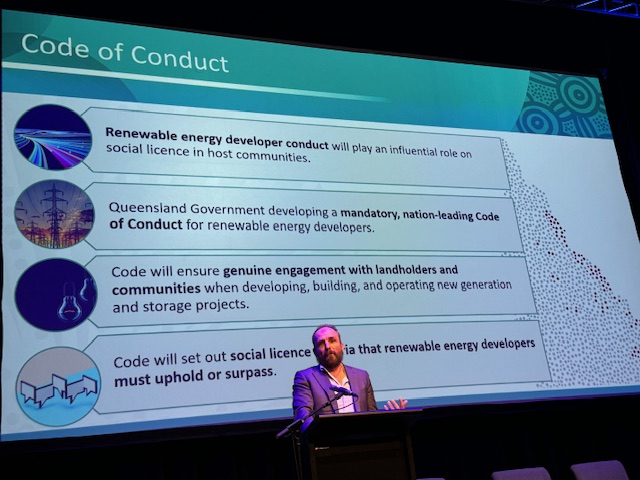
Such facilitating programs by government simply were not considered in 2010, but it is what should have happened.
Indeed regional development missed out substantially because the State Government’s limited development conditions on the four multinational consortia meant the roll-out of the new industry became a costly and inefficient ‘race for gas’ exports.
The allure of royalties to government and the demand for investors to get a return on their massive investment saw four companies duplicate gas infrastructure unnecessarily as well as sprinkle so-called “social licence” community investments rather randomly.
There was not a consistent approach to landholder and stakeholder engagement.
It would take over half a decade and learning from mistakes for the parties to create a better way.
Had the government demanded and specified pre-competitive collaboration between the four consortia, a lot more industry investment could have gone into shared infrastructure and other regional development.
So coal seam gas was a massive wasted opportunity from the view point of lasting regional development.
Understand the drivers of the other parties
What this schematic of information flows shows also is that where you stand in the development process pretty much determines how you see things – government, proponent industry or region/community/landholder.
But the secret to success in ground up regional development is to understand just what the development project process entails and what the other parties are seeing from their position.
Understand the drivers of the other parties and what they are seeing and doing, and you’ll be in a different situation to where the communities and farmers of the Darling Downs and Surat Basin were in 2010.
In the rollout of the infrastructure underpinning the nation’s energy transition, we have just begun, and we’ve got a long way to go.
But what’s has really struck me today is the dynamic growth in technical capacity and the diversity of technologies in play.
It’s imperative we have appropriate governance system capable of framing the roll-out fairly and sustainably.
It’s going to take time.
As parties to the process you will need patience, respect for others and a focus on performance and beneficial outcomes that reflect in stronger regional communities.
Our processes can respect the confidentiality of a commercial contract.
I’m not asking for farmers to tell their neighbours what they’ve been paid.
But I’d certainly suggest to the farmer who is receiving royalties that he or she has an interest in making sure there is a broader community understanding and feeling that there is a local benefit coming from this commercial arrangement that goes beyond the farm fence.
Build trust by working with other stakeholders
Make sure you create time and space for innovation, collaboration, and stakeholder learning.
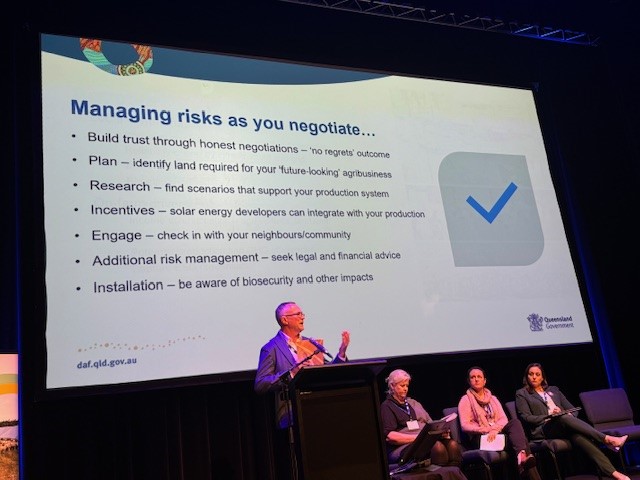
Mistakes been made, but it’s all part of the process. This will not be a perfect transition. It never is. History’s always been messy.
Government particularly should take a longer-term approach, and yet the political instinct will always to be sell the short-term benefit.
So you the stakeholders on the ground must argue the point to government that the longer term proposition for regional development has to be on the table too.
And to our accountability agents statutory and otherwise, it is important you understand that being set up by government doesn’t necessarily make you trusted.
In recent years the Gas Fields Commission has worked this out and done much better in it’s engagement strategy which is why it’s mantra has been extended to include renewables too.
Trust is earned as the renewable energy industry itself is learning.
I believe they will learn with you if you engage with them strongly, constructively and strategically.
And indeed, by doing that, we will all have a stronger outcome.
Historians will also tell you to learn from the past because the lessons are palpable.
We can all do better the next time round. And here in southern Queensland we’re just about there to go again.
Thank you very much.

 Professor John Cole