On Monday morning 9 September 2024 parts of a pre-recorded interview I did with Owen Jacques at the ABC Sunshine Coast went to air.
It was prompted by the forthcoming state election and the imbalance of power between regional and metropolitan Queensland.
I talked about something more fundamental to our future than the next election. The following remarks have been lightly edited to make for easier reading.
Presenter
You’re on ABC Sunshine Coast. I’m Alex Easton.
We all live in a state where you can drive thousands of kilometres without crossing a border. But is Queensland maybe just a bit too big?
The electorate of Traeger, for example, in the central West, spans more than 420,000 square kilometres.
It’s around about the size of Sweden. There’s been a call for Australia to ditch its states altogether and become about a dozen smaller what you call provinces.
Emeritus Professor John Cole from the University of Southern Queensland’s Institute for Resilient Regions admits it’s a pretty bold suggestion, but he tells ABC Sunshine Coast reporter Owen Jacques it makes more sense than having Brisbane decide what happens in Boulia.
John Cole
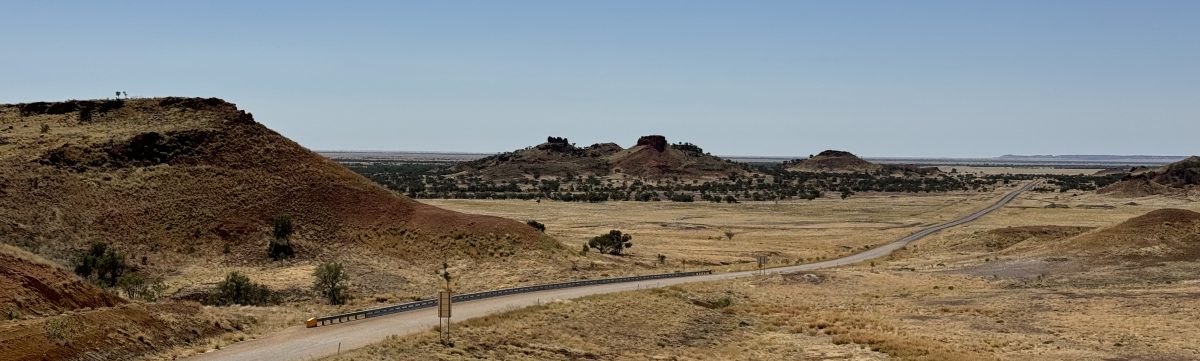
The way we’ve configured our states…[makes them]…almost too large to be administered by a government which in some cases can be up to 2000 kilometres from the community that it’s supposed to be serving.
I’m very sympathetic to the idea of a need for another state in North Queensland.
Sometime this century there should be a constitutional convention organised by Australians that would actually get rid of the existing states and replace them with about 14 regional governments that then directly relate to a federal government.
Our federation, Geoffrey Blainey described as ‘stillborn’.
It’s not fit for purpose in that we’ve got these enormous areas [represented by just] three Members of Parliament [for example] from Gregory to Traeger to Cook in Queensland.
That’s an area bigger than Western Europe and you’ve got three people representing it.
So how do we expect to get really decentralised regional development if we don’t have sovereignty in the regions? That’s the point.
The way Greg Williamson Mayor of Mackay describes it as leaving the regions as ‘a victim of democracy’ – understandably, because most people live in the cities.
But if we are ever to get more people living in northern Australia, living in regional rural Queensland, we will need a lot more local say there and the only way to do that I think longer term would be to see the Federation rewritten.
As a nation if we really care about making the most of the enormous capacity we have in this country we should be up to that.
Owen Jacques
When you make that statement to state and federal politicians and representatives, what sort of response do you get?
John Cole
You know some understand it.
I mean, it was Chris Hurford, [Immigration Minister in the first Hawke Government] who [along with others promoted a regionalism as worth looking at in the future federation].
There have been a number of eminent Australians who have actually seen the need for this. Geoffrey Blainey, probably one of our greatest historians, sees it.
Anyone that’s got a real understanding of the imbalance between metropolitan interests and regional interest or rural interest will see it.
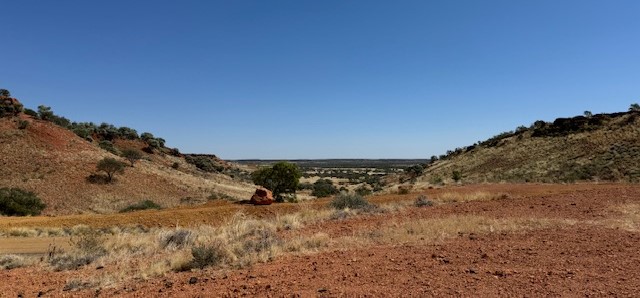
I’ve been to Boulia this week and it’s 1700 kilometres away from Brisbane where I’m sitting right now.
It’s an enormous distance and their community probably got more in common with Alice Springs and other parts of northern Australia than it does with Brisbane.
This idea that somehow a state represents a community of interest I think is nonsense when they are so large.
They possibly could if they were smaller and more reflective of regional economies and regional communities of interest, as we see in the United States and in Canada.
Even though Canada had large provinces, after it became a nation it still developed four additional provinces.
So you know there’s examples around the world where we’ve seen political development at the regional level evolve consistent with the interests of rural and regional development.
In Australia we don’t have that. We’ve got a fly in fly out idea of government and of course that creates the massive power imbalance which frustrates the life out of many regional people.
Owen Jacques
I don’t imagine people in power, particularly at a state and territory level, are going to be willing to watch their power be eroded. Do you think that is something that is possible?
John Cole
Well, I think it might get to point one day when both sides of politics in north Queensland example, vote for a constitutional convention to create their own state.
We’d have to listen to it then, but it won’t happen while there’s still political partisan political division.
Presenter
And that is Professor John Cole, from the University of Southern Queensland, speaking with ABC Sunshine Coast’s Owen Jacques. It is just about time for the 7:00 news.
 Professor John Cole